Arsenic is another heavy metal, or toxic metal, whichever term you want to use, and it’s highly toxic.
There is no known function for arsenic in your body.
It’s one of the many “bad toxins” that gets into your body and it really shouldn’t be there.
As with mercury and other heavy metals discussed in Hompes Method, arsenic is pretty much ubiquitous in the environment these days.
As such, it’s not a question of whether you have arsenic in your body – it’s a question of whether your arsenic burden is contributing to your symptoms.
Let’s take a look at how arsenic gets into your body, the symptoms it may cause, and how to find out if you’re struggling with your own arsenic “burden”.
Sources of arsenic
The first step in any detoxification process is always to minimize your exposure to the toxins in question, but that’s not always easy.
But you can’t minimize exposure if you don’t know where the toxins are coming from.
Arsenic doesn’t have colour or flavor, and it’s very hard to detect.
Varying amounts of arsenic are present just about everywhere, though areas with smog and industrial emissions will have higher levels of arsenic.
It is present in pesticides (therefore on many foods) and in drinking water.
Primary arsenic sources include:
- Pesticides sprayed on food
- Chicken and eggs – chicken feed can have very high arsenic levels
- Drinking water (see this US map to get an idea of the extent of arsenic levels in drinking water)
- Some protein powders
- Some commercial fruit juices
- Possibly via the placenta – i.e. mum passes arsenic to her fetus
- Cosmetic products (in one study, 20% of the cosmetic products tested contained arsenic)
- Cigarette smoke
- Laundry detergent
- Coal burning
- Industrial smog
- Mining operations
- Metal manufacturing
- Glass production
Arsenic may also have entered your body in other ways, because it was:
- Previously used in some wallpapers
- Previously used in some paints
- Previously used in some medications
With this wide variety of arsenic sources, is it any wonder this potent toxin accumulates in your body?
Arsenic toxicity symptoms
Acute arsenic poisoning is not the same as chronic arsenic toxicity and it’s important to make that distinction.
Acute arsenic poisoning
You’d typically inhale arsenic, or consume it in food or water. Consuming large quantities would typically causes:
- Nausea and vomiting
- Intestinal tract inflammation
- Diarrhea two hours later
In very serious arsenic poisoning situations, the following complications can occur:
- Salt and water loss due to severe diarrhea
- Shock
- Kidney failure
- Coma
- Respiratory (breathing) paralysis.
Permanent liver and kidney damage can result from a serious situation like this.
Of course, this type of situation beyond the tools we use in Hompes Method, and must be dealt with by the appropriate medical team.
Chronic arsenic poisoning
Here are some of the less obvious, day-to-day symptoms that may result from arsenic accumulation in your body:
- Confusion
- Fatigue
- Increased hair Loss
- Headaches
- Abnormal heart rhythm
- Chronic diarrhoea
- “IBS”
- Skin rashes
- Pins and needles in hands and feet
- Difficulty shaking off infections, or acquiring them easily
- Dark grey skin pigmentation
- White strips on your fingernails (called ‘Mees’ Bands’)
- Conjunctivitis
- Wart-like eruptions (especially inner hands and soles of feet)
Dr. Andrew Cutler, Ph.D (author of several highly scientific books on heavy metal poisoning) lists the following symptoms of chronic arsenic poisoning:
- Anguish
- Restlessness
- Fear
- Worry
- Selfishness
- Self-injurious and vicious behavior
- Fearful dreams
- Crave coffee and milk
- Short menstrual cycles
- Feel sleepy a lot
- Digestive problems
- Food allergies
- Headaches
- Pins and needles
- Tender and painful feet
- Numbness or tingling of the legs and feet
- Pain in the hands
- Weak fingers
- Peeling skin
Over time, chronic diseases can develop because of arsenic’s ability to cause:
- A reduction in the production of red and white blood cells
- Oxidative stress / oxidative damage
- Nerve damage
- Kidney problems
- Damage to blood vessels
Remember, you get ill because there’s too much stuff in your body that shouldn’t be there, combined with inadequate levels of stuff that should.
Arsenic and cancer
Long-term exposure has been linked to cancer of the bladder, lungs, skin, kidney, nasal passages, liver and prostate.
During my research into heavy metals, I came across a 2010 document by the President’s Cancer Panel (in the USA).
Like you, I had no idea such a panel existed. The document is titled Reducing Environmental Cancer Risk – What We Can Do Now, and was written by LaSalle D. Leffall, Jr., MD and Margaret L. Kripke, Ph.D.
It’s a long document but it provides undeniable evidence of how environmental toxins cause symptoms and disease.
To emphasize some of the major problems associated with arsenic, the report states:
“Ecologic, cohort and case control studies of highly exposed populations have linked inorganic arsenic in drinking water with skin, lung, bladder and kidney cancer in both sexes and with prostate cancer in men. Both the Environmental Protection Agency and International Agency for Research on Cancer classify ingested inorganic arsenic as a known human carcinogen. Inorganic arsenic is also associated with numerous non-cancer conditions, including gastrointestinal, neurologic, blood system, endocrine, respiratory, skin, reproductive and developmental effects… Some evidence suggests that diets deficient in micronutrients such as vitamins B2, B6, B12 and folic acid may increase susceptibility to arsenic-induced cancers.”
Testing your arsenic levels
It’s impossible to determine with 100% accuracy how much arsenic has built up in your body, but you can certainly gain a good understanding using the Hompes Method Testing Toolkit.
There are four types of laboratory tests for the detection of arsenic and other toxic metals in your body:
- Blood
- Urine
- Hair
- Stool
There is also a second urine test, called a porphyrins test, which can tell you whether arsenic or other heavy metals are having a toxic effect on your body.
Apart from the blood test, all these laboratory tests can be performed in your own home, which makes them extremely convenient.
If you’d like further information on each specific test, please click on one each of the four links, above, or download my special report entitled What You Need to Know About Heavy Metal Testing.
Which tests do you need?
I’m often asked this question and, to be honest, in order to get a full understanding of your heavy metal levels, it’s ideal to run as many of the tests as you can.
You cannot get an accurate picture of your mercury levels without combining the tests, because each test profile provides information that must be interpreted in different contexts.
For example:
- The blood test tells you more about your recent or ongoing arsenic exposure.
- The hair test tells you about how much arsenic is being pushed out of your body in your hair over an approximate 2-3 month period.
- A urine test with supplements to actively pull arsenic out of your body begins to give you an idea about your total body load, or burden (which can’t be assessed any other way).
- The porphyrins test tells you whether arsenic is causing specific blocks in your metabolism.
However if budget is a concern, a less financially demanding testing regimen can be designed for you. I’ve found the following tests most useful:
- Blood
- Hair
- Porphyrins
If you can run these together it’s a great starting point.
Please note that blood and hair tests also determine your nutrient element levels (e.g. zinc, calcium, potassium, selenium, magnesium, etc.), which are obviously very important.
In other words, a well-designed testing regimen looks at both toxic metals and “good” minerals at the same time, which gives you the biggest bang for your buck.
Arsenic case study
Gabriel, 22, was suffering with lack of focus, concentration and memory, fatigue, sleep problems and intermittent digestive pain.
I ran a digestive health MOT with him, checked his hormones and also his nutrient status. Whilst there were some issues in his test results that needed “tweaking”, nothing I saw in his results explained the severity of his symptoms.
Working through Hompes Method Basics helped Gabriel’s energy and sleep, whilst settling down his digestive pain.
But we still hadn’t hit the jackpot in terms of finding out why his symptoms had developed.
That was before we ran his heavy metal tests.
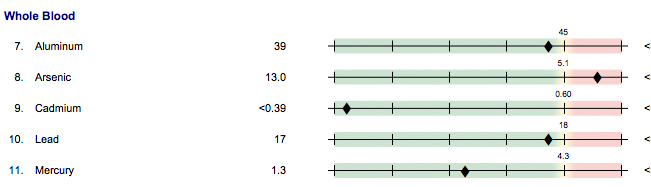
Gabriel’s blood test, shown below, indicated a very high arsenic level, suggesting to me that he was being exposed to arsenic in his daily life.
Gabriel then ran a urine test after taking some nutritional supplements that pull heavy metals out of their storage sites in his body, thereby giving an indication of possible body burden.
The urine test results are shown below, in which you can see an extremely high arsenic level. The laboratory re-checked (“repeated and verified”) the sample because Gabriel’s arsenic level was so high.
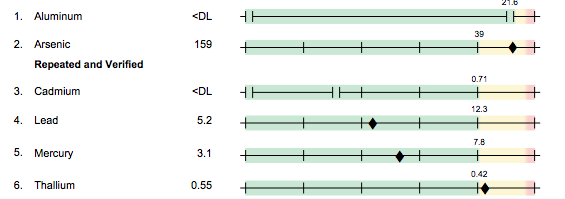
In the absence of other lab test findings to explain Gabriel’s symptoms, and the fact that his grandfather readily used pesticide sprays around the garden since he was a kid, we both drew the conclusion that the arsenic had to be a major factor in his symptoms.
At the time of writing, Gabriel and I are still working through a careful detoxification plan to help reduce his arsenic burden and he is gradually improving.
How important are these heavy metal tests?
Whilst these tests are all important, the detoxification of arsenic and other toxic metals from your body is something that should only be addressed AFTER you’ve dealt with other important issues.
It’s very tough on your body to run specific detoxification programs without first getting your diet, digestive function, liver/kidney function and nutrient / hormone levels optimized.
Failure to work on these issues in the optimal sequence can result in extreme problems during the detoxification process.
Even in Gabriel’s case, before commencing his detox plan we had to work on getting his nutrition optimized with Hompes Method Basics in addition to checking his nutritional and hormonal status and liver / kidney function.
I definitely do not recommend you enter into a serious “heavy metal” detox program without supervision.
That said, if you run tests to check your nutrient mineral levels using the hair and blood tests, you automatically get an idea of your toxic metal levels, up to a point.
I always recommend the following steps prior to running a heavy metal detox program:
- Minimize toxic exposure by optimizing diet and lifestyle (Hompes Method Basics)
- Optimize digestive function
- Check adrenal and thyroid hormone status
- Check nutrient status, liver and kidney function (this will give some info on heavy metal toxicity)
- Optimize these factors as best you can before commencing the detox process.